How to Clean uPVC Window Frames That Have Yellowed
Sunshine on 19 August, 2025 | Comments Off on How to Clean uPVC Window Frames That Have Yellowed
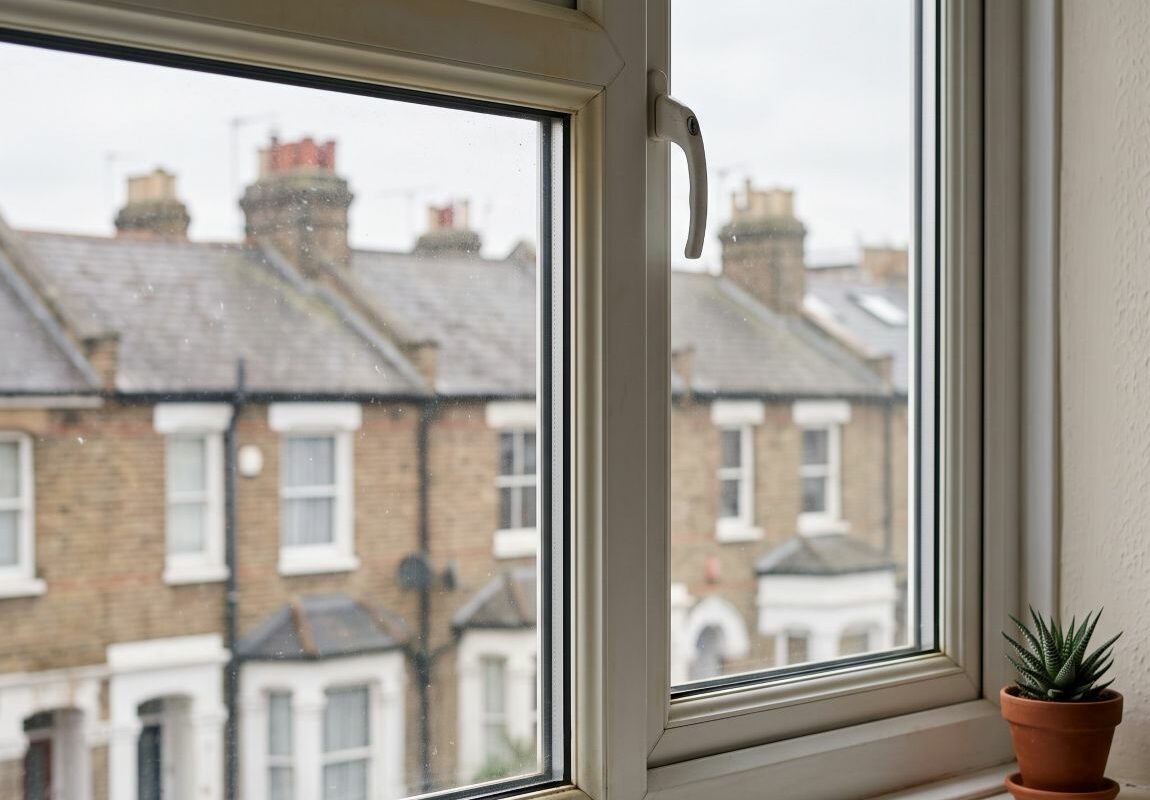
Yellowed uPVC is one of the few cleaning jobs where the honest answer is sometimes “you can’t.” That’s not what people want to hear when they’ve got a whole terrace of frames gone the colour of weak tea, but it’s the truth, and it saves everyone a wasted afternoon with the wrong bottle. Some of that yellow is dirt sitting on the surface, and it’ll come off with warm water and ten minutes. Some of it is the plastic itself, changed all the way through, and no product on a shelf will touch it. The whole job is telling those two apart before you start scrubbing.
Why do uPVC window frames turn yellow in the first place?
Two things do it, and they don’t behave the same way. The first is grime – the everyday film of pollution and cooking grease drifting out through a kitchen window, and in the worst houses the amber stain of decades of cigarette smoke. That’s a coating. It sits on top of the plastic and it comes off.
The second is the plastic breaking down, and that’s the one people underestimate. uPVC is white because it’s loaded with a whitener, titanium dioxide, along with stabilisers that hold the colour steady against sunlight. Ultraviolet light works away at all of it over the years, oxidising the surface and breaking down the very additives that keep the frame white, until the plastic discolours from within. That yellow is the plastic, changed all the way through. The older the window, the worse it tends to be – uPVC extruded in the eighties and nineties had far weaker UV protection than the co-extruded frames going in now.
Why the south-facing and street-facing frames go first
You can read a house’s yellowing like a sundial. The frames that have gone worst are the ones that cop the most sun – the south and west elevations, the top of a bay that nothing shades – while a north-facing frame of exactly the same age can still be near enough white. A busy road stacks the odds further; a street-facing frame on one of the main routes through London wears a greasy traffic film that a garden-side window never gets near. When a client shows me one yellow frame and three clean ones on the same house, I don’t need to ask which way it faces.
Is it dirt on the surface, or has the plastic itself changed?
This is the test that decides whether the rest of the day is worth your effort, and it takes about a minute. Find an inconspicuous corner – the inside edge of a frame, behind where the curtain sits – and clean that one patch properly with warm soapy water and a cloth. Really clean it. Then look. If the patch comes up noticeably brighter than the frame around it, you’re dealing with grime, and the whole frame will clean up the same way with a bit of graft. If your cleaned patch sits exactly as yellow as everything around it, wet or dry, the colour is in the material, and I’ll save you the afternoon: the straight answer there is that no cleaner brings it back.
There’s a middle case, and it’s the one that fools people. A frame can develop a fine chalky bloom as its top layer oxidises – run a dark cloth over it and you’ll pick up a faint white powder, the same chalking you get on old car paint. That layer dulls the colour and holds dirt, and a good deal of it can be cut back, which makes a frame look years younger without touching the plastic underneath. That part is real and worth doing. It is a world away from reversing the yellowing, and the products that blur the two are selling you the easy half as though it were the hard one.
The chalky oxidised layer you can buff back
The one restorative job that earns its keep on a yellowed-looking frame is cutting back that chalky bloom. A cream uPVC restorer – a mild abrasive polish made for the material – worked over the surface with a soft cloth lifts the dead oxidised layer and brings up the sounder plastic beneath, and the difference on a chalked south-facing frame can be startling. Two cautions. Keep it off the rubber seals, which it will dry out, and treat it as a finite trick – you can only cut back that surface so many times before there’s nothing left to cut, and then you’re looking at the true colour of the plastic, whatever that turns out to be.
What actually cleans yellowed uPVC without wrecking it?
Start boring and cheap, because it works more often than anything fancier. It’s warm water with a drop of washing-up liquid on a soft cloth or a sponge, worked patiently over the whole frame – that clears the ordinary film of grime behind most surface yellowing, and on a lot of frames it is the entire job. Rinse it down and dry it off so you’re not leaving soapy runs to streak in the light. Pick a dull hour or a shaded elevation to do it, too – with the sun full on the frame the soapy water dries before you’ve rinsed it, and you end up chasing streaks you made yourself.
For grime that’s properly ingrained – the sticky brown build-up in the corners of a kitchen window, the nicotine amber in an old smoker’s front room – you go up a step to a dedicated uPVC cleaner. The milky cream cleaners made for the material have a fine cut that shifts baked-on dirt the soapy water walks straight past, and they’re formulated not to score the surface the way a kitchen scouring cream will. A cheaper standby that surprises people is plain white vinegar, half and half with warm water, left on greasy grime a few minutes to loosen it before you wipe. Work the flat faces with the cloth and the corners and mouldings with an old toothbrush, because the dirt that makes a frame look tired hides in the recesses far more than on the open faces.
The rubber seals and drainage slots everyone skips
The black specks along the rubber gaskets aren’t yellowing at all – they’re mildew, and they’re the one thing that leaves a freshly cleaned frame still looking grubby. A soft brush, or a cloth corner with the soapy water, run along the gasket lifts most of it; for the stubborn black, a cotton bud is fiddly but it gets there. While you’re down at the bottom of the frame, poke out the little drainage slots along the outer sill – they clog with muck and dead flies, and a blocked one sends rainwater the wrong way, which is a far bigger problem than any amount of yellow.
Which products should you keep away from your frames?
More frames get ruined by the fix than by the dirt. Bleach sits top of the list, and I’ll be blunt about it: it does nothing for genuine yellowing, because bleach whitens organic stains and UV-degraded plastic has no stain to whiten – so you get no result on the colour while the bleach dries out the rubber seals and, left to sit, can attack the frame surface itself. People reach for it because it’s the whitener under the sink. It’s the wrong whitener for this by a mile.
Abrasives are the next trap. A green scourer or a melamine sponge – anything that cuts hard – takes the smooth extruded skin off the plastic, and a scratched frame holds dirt worse ever after and won’t polish back to a shine. Solvents are worse still: acetone, nail varnish remover and their like will soften and dull uPVC on contact, and that damage is instant and there’s no undoing it.
Why the “restorer” sprays are mostly a con
Straight answer on the spray-on “uPVC restorers” and the WD-40 trick doing the rounds online: what they do is add a temporary shine. Shine hides grime; it doesn’t lift it. A wipe of an oily or silicone-heavy product over a tired frame makes it gleam for a fortnight, sealing the dirt under a slick film that then pulls in more dust and has to be stripped off before you can clean the frame properly. It’s a photo-day fix, not a clean, and on real yellowing it changes nothing you’d still be looking at once the sheen dies. If a frame’s colour has gone, a spray from a rattle can won’t bring it back – I’ve never once seen it happen.
What if the yellowing won’t come off at all?
Then, straight answer, you’ve got three options, and pretending otherwise only wastes your money. You live with it, which is what most people sensibly do on a back window nobody sees. You have the frames professionally spray-refinished – a proper trade job, a two-pack coating sprayed on site, not a can from a shop – which can bring a tired frame back to a clean, even colour for a fraction of replacement. Or you replace, which for badly UV-degraded frames pushing thirty years old is often the sensible call, given that modern uPVC holds its colour far better than the stuff it’s taking out.
Spray-refinishing, and what it can and can’t do
Professional uPVC spraying has come a long way, and it’s the one route that lays a fresh, even colour over yellowing that no cleaning ever could. A properly prepped frame takes a durable coating in white, or anthracite grey if you fancy a change, and it holds up for years. What it can’t do is rescue a frame that’s structurally shot – spray a perished seal or a warped sash and you’ve painted over a problem that comes straight back. I sent a client in Palmers Green down this road last year, a 1990s replacement bay gone deep cream on the south side and still white on the shaded return, and no cleaning was ever going to close that gap. The sprayer matched it to the shaded frames, and from the pavement you’d never know. She’d been ready to replace the whole lot. She kept the windows and spent a fifth of the money.